Wednesday, January 28, 2015
All the Pretty Horses
I am Texan.
And this fact may greatly influence my impression of Cormac McCarthy's Border Trilogy. But I am not really sorry for the fact of my birth and the love of that land borne into my heart. As I am endeavoring to read the Border Trilogy by Cormac (we are on a first name basis now since I have read two of his books and seen at least one screen adaptation of his work); I am, indeed, congratulating myself on the place of my beginnings again.
My love for all things Cormac (or pretty much all things I have experienced thus far of Cormac) dovetails nicely with my endeavor not to spoil anything in the reviews on this blog. So I will attempt to review All the Pretty Horses (book one of the Border Trilogy) without giving anything away.
Ready? I have two primary thoughts about the book:
1. You know those people who you hear sing and that saying, "I could listen to them read the phone book."? That is Cormac McCarthy for the written word and the lesser things of life. Cormac is that guy who has so observed the world that he has discovered the nuances of objects and events. And he takes those observations and translates them into some of the most beautiful prose I have read. He does it with the most mundane things. In All the Pretty Horses, he does this whilst describing the heaves that come with vomiting. I had to read that paragraph twice, just to revel in it. And he does it again in AtPH describing the feeling of waking up and not knowing where you are in a land where fear is the default emotion.
2. This is my second time through AtPH. And this time through I was noticing a prevalent theme I don't think I noticed or remembered from the first read. The theme is the contrast between a God-like plan (or fate) and the choices of man. The characters talk a lot (as much as characters talk in a Cormac book about anything), wondering if there is a God and if he is in charge of the events of men. This is juxtaposed with some seriously questionable decisions on the part of many of the characters. And then it is highlighted by the main character (John Grady Cole)'s need to set things right, to do the right thing, to have everything right (at least as he sees it). Mix in some events that would make most men shudder and you have a basic man questions God story. Does He exist? How could He be good if things like this happen? etc. etc. Maybe I am reading a little too much of my own theology into this, but I definitely see the contrast and conflict there.
And I have a secondary thought:
The way that Cormac describes the shift of the world that happens when you fall in love at first sight is spectacular. As a girl who in a way, fell in this manner for the love of her life, he captured it perfectly. I am not even going to quote the things he wrote so as to encourage you to pick up this book and read it to discover these tiny nuggets of sensitive beauty set amongst finely-honed boulders of brilliant observation.
The book is basically a Bildungsroman for John Grady Cole, but even as you turn the pages, you will discover that he was very much a man before you opened the book. Nevertheless, the fact that it remains a development of a boy into a man reveals that we are always on this journey of becoming more.
-L
Rating: 6 out of 7
This book fulfills 1/3 of the requirement for a "trilogy" in my current book reading challenge
Wednesday, January 7, 2015
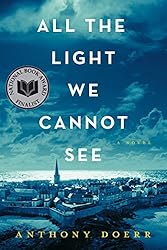
All the Light We Cannot See, first read of the new year

Anthony Doerr's book made it to the top of numerous top ten of 2014 books and that is how I discovered it. My trusty EW reviewer told me that the book was about a boy and a girl and was the most hopeful book they had read in a while. At least that's what I remember from the review. And although I am not normally a fan of historical fiction, I thought I would give it a go.
I, like the EW reviewer, do not want to give away too much of the book. (I hate spoilers and you should, too!) So, I will just say that it follows the lives of a number of people including a girl and a boy in the years leading up to and during the Second World War. And even as I sit writing this review, I am struck by one major theme: truth.
In the years leading up to the Second World War truth (the this-is-the-real-deal, unadulterated truth) was scarce. Propaganda was rampant. But what was worse than that is many people wanting to create their own truth because what they saw around them just couldn't be so. The horrors of the Third Reich's rise presented people with the opportunity to face the reality of what was happening or create their own excuses or escapes to remove themselves from the harsh truth. Often the excuse was self-preservation - knowing that if you had to face reality, it would destroy you or ones you loved, or both.
This is what I see as a major theme of the book and of my favorite movie of all time, Life is Beautiful. The reader/viewer is forced to place herself in the shoes of the characters and ask herself, "What would I do in that situation? Would I lie to those I love? Would I lie to myself? Could I accept the truth of the situation, or would I choose to escape/ignore?"
In All the Light We Cannot See many of the characters choose to believe stories they are told, to believe propaganda, to see what they want to see, and even to lie to one another in hopes of providing comfort. But there are a brave few in the book: the ones who see the truth and refuse to cover it up with myths and denials. These are the characters that I connected with in the book.
There are many more themes to explore from the book. As I said, it would make a great book for group discussion. Ultimately, I very much enjoyed the simple (yet often profound) prose and the structure of the book (a jumbled timeline converging to a single day). I did not check to see how many pages the book was before reading it on my e-reader. I felt this would be a short book and so I savored each word for the first 100 pages or so. But then I checked and found it was over 500 pages and upped my reading pace decidedly. I feel like the the denouement could have almost been omitted and found I would have liked for the story to end differently, but the Second World War didn't provide everyone with a perfect ending, either.
Have you read it? Let's talk.
-L
Rating: 5 out of 7
This book fulfills the "Book by an Author You Haven't Read" requirement in my challenge for the year.
Tuesday, February 7, 2012
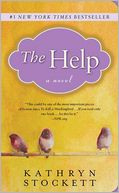
The Help: A Rumination on Civil Rights and such
The latest read to fit into this category of books for me is The Help. The ubiquitous read was EVERYwhere last year and the year before: book blogs, newspapers, morning television, etc. The furor was renewed with the creation of the motion picture adaptation. Which is what brought me on board.
I like to attempt to read the source materials for most of the movies (that have source materials) before I see the movie. In fact, I tend to refuse to see movies until I have read the book...yes, still waiting on The Maltese Falcon. So, since The Help (the movie) has been nominated for the Academy Award for Best Picture and I am going to the AMC Best Picture Showcase in a couple of weeks, I found myself with some reading to do!
Thankfully, the book is of the page-turning sort. It is a well told story, even if the dialect gets in the way a little bit.
I couldn't help thinking of my summers in Mississippi with my grandparents in the late 80s. Many of the vestiges of the racism that formed the struggle at the center of The Help, were still evident. A trip to the Piggly Wiggly with my grandmother was still included a chance to hear the n-word used, to see the lines drawn subtly between classes and races. My grandmother had a black woman to help her around the house on a weekly basis and this was still pretty common. My grandmother looked down on her, but also showed her kindness and a concern for her family that was palpable to a child under the age of ten. The contradictions inherent in these kinds of relationships were easily recognizable and equally infuriating.
I grew up with a strong aversion to racism and had a real-life struggle with friends at a young age that left an impression on me forever: that the lines drawn between people are often not drawn by others for us to see, but are drawn by suggestion. Some of us can overcome the power of that suggestion and shrug off stereotypes to examine people as individuals. Some of us cannot overcome the power of those persuasive influences and are doomed to follow in their opinions and actions. What it comes down to in the end is the question: are you going to follow or ar you going to lead?
The characters who form the center of The Help are of the latter group: leaders. They don't stand up and make speeches or try to force others to see things their way. Instead they live quiet lives of conviction and wait for others to catch on. I think it is this portrait of a leader in the midst of the civil rights era that has made The Help the phenomenon it is. There is something that resonnates in the queitly done everyday activities that change the way others think. It is leading by example, even if it looks like no one will follow. This is the type of person who really accomplished civil rights reform in America and Kathryn Stockett paints their portraits sharply and beautifully.
I am glad I read The Help and I really am looking forward to seeing the film. I am also interested in getting the audio version. Has anybody seen the movie or heard the book? Please let me know what you think.
Rating: 6 out of 7
-L
Tuesday, January 31, 2012
Room
Thus, I will say:
The book is separated into four sections. The second section is the best. The first section is just mildly less interesting than the second section. And the last two sections are almost an afterthought. In my opinion the book could have ended almost at the end of the second section.
Yes, that is my review. You would have to read it to get it and if you have, I much appreciate your input on a spoiler-free review.
In conclusion, I would like to say that I think Tubthumping is an inappropriate song for a 5 year old, but I am not judging.
Rating: 4.5 out of 7
Friday, August 19, 2011
One Day
Anyway, I don't usually read anything that could be considered beach reading, nor do I read romance novels; but I got a copy of this book as a prize in an Oscar trivia contest and pregnancy does crazy things to one's brain. So, like I said, I read the book.
How did I feel about it?
At first I didn't really have any connection with the characters. They seemed to be hackneyed characters for a romance novel: the brainy, middle class girl secretly pining for the upper-crust, aloof guy stunted in the emotional maturation department. The only thing I found interesting about the book was the structure of it. Each chapter is set on the same day, each year for a number of years, begining with the day after college graduation for both characters. I think the structure is what kept me coming back. It was like some soap opera I couldn't turn my back on even though the characters do everything predictable soap opera characters do. I guess I was hoping they would go all Passions on me and have a witch with a little person who creates lots of mischeif.
No such luck.
The story remains predictable through most of the book. What wasn't predictable was my reaction to the end of the book. Either the characters had grown on me so much that I feel in love right along with them OR I was so overloaded with hormones whilst reading it, that I bawled for an entire afternoon as I finished the book. I think it must have been the latter because when I look back on it now, there is no way it was the characters.
So, the age old question: Should I read the book or see the movie first? Well, I don't think I can answer that for you, because I haven't seen the movie. But, having read the book and having seen other romantic movies from Hollywood, I can tell you: there's not much special to see or read here. I think you might be better served saving your money on both the book and the movie. How about Pride and Prejudice instead?
Rating: 3 out of 7
-L
Sunday, February 6, 2011
Citizen Vince
The story involves the main character, Vince, a reformed mafia guy relocated and given a new identity via the Witness Protection Program. The characters inhabiting Vince's new-found world including: prostitutes, card sharks, a pot-head teeanage baker, and his new criminal buddies are well-formed and interesting. And the situations Vince finds himself in are unexpected. What makes the story worthwhile though is the thought-provoking meditations on choice. What will Men do when faced with something they never thought they would? What is worth dying for and what is worth killing for? Also, if you got the chance to forever change your life in one moment, would you do it, or would you choose what you already know?
I loved the background to this novel, set in the week leading up to the election of 1980 - Carter vs. Reagan. Since I am a lover all things 80's, I found the historical background matched very nicely what the characters were going through - the end of an era, the hope for the future despite the struggles of the present.
This book is definitely worth the time. It is original and often funny, filled with great characters. I look forward to checking out the other books by Jess Walter.
Rating: 6 out of 7
-L
Thursday, December 9, 2010
Modern Day Shakespeare?
So you know how there are many common words and phrases coined by the great Bard bandied about in everyday conversations, whilst those who utter them are oftentimes oblivious to their auspicious origins? This was the thought in my mind as I read my most current book. Many of the most "quotable" phrases that have followed me throughout childhood and into adulthood were written by a man I likely would have never heard of and barely know anything about. Nonetheless, he wrote the most amazing lines!(e.g. "I do not think that means what you think it means;" "To the pain," "Inconceivable;" and "I'm not a witch, I'm your wife!")
For those of you who haven't gotten it by now (where have you been since the 80's?), the book I speak of is The Princess Bride. The constant favorite since the day it premiered as an 80's movie with the guy from Robin Hood: Men in Tights, is based on a much older manuscript by one S. Morgenstern. Apparently the only way a modern, American reader should take his masterpiece in is by reading the abridged version by William Goldman (screenwriter, egotist, Fred Savage doppelganger). This shortened version (as we are constantly reminded by the editor) cuts out all the boring stuff and gets to the real adventure.
But back to the reason for this post - I was shocked by the lines written by none other than S. Morgenstern. I would think Mr. Goldman, being such a successful screenwriter, would have been the one to put all the words into the character's mouths. I mean they got ALL the words right. And what screenwriter wouldn't love to gets his hands on a great work of genius if only for the purpose of ruining it with his own ramblings. But, no! Morgenstern had it all!
Rating: The book: 7.5; Goldman's ego: 10