Showing posts with label modern literary fiction. Show all posts

Wednesday, January 28, 2015

All the Pretty Horses

Alright, I have to admit something right here and now:

I am Texan.

And this fact may greatly influence my impression of Cormac McCarthy's Border Trilogy.  But I am not really sorry for the fact of my birth and the love of that land borne into my heart.  As I am endeavoring to read the Border Trilogy by Cormac (we are on a first name basis now since I have read two of his books and seen at least one screen adaptation of his work); I am, indeed, congratulating myself on the place of my beginnings again.

My love for all things Cormac (or pretty much all things I have experienced thus far of Cormac) dovetails nicely with my endeavor not to spoil anything in the reviews on this blog.  So I will attempt to review All the Pretty Horses (book one of the Border Trilogy) without giving anything away.


Ready?  I have two primary thoughts about the book:

1. You know those people who you hear sing and that saying, "I could listen to them read the phone book."?  That is Cormac McCarthy for the written word and the lesser things of life.  Cormac is that guy who has so observed the world that he has discovered the nuances of objects and events.  And he takes those observations and translates them into some of the most beautiful prose I have read.  He does it with the most mundane things.  In All the Pretty Horses, he does this whilst describing the heaves that come with vomiting.  I had to read that paragraph twice, just to revel in it.  And he does it again in AtPH describing the feeling of waking up and not knowing where you are in a land where fear is the default emotion.

2. This is my second time through AtPH.  And this time through I was noticing a prevalent theme I don't think I noticed or remembered from the first read.  The theme is the contrast between a God-like plan (or fate) and the choices of man.  The characters talk a lot (as much as characters talk in a Cormac book about anything), wondering if there is a God and if he is in charge of the events of men.  This is juxtaposed with some seriously questionable decisions on the part of many of the characters.   And then it is highlighted by the main character (John Grady Cole)'s need to set things right, to do the right thing, to have everything right (at least as he sees it).  Mix in some events that would make most men shudder and you have a basic man questions God story.  Does He exist?  How could He be good if things like this happen?  etc. etc.  Maybe I am reading a little too much of my own theology into this, but I definitely see the contrast and conflict there.

And I have a secondary thought:

The way that Cormac describes the shift of the world that happens when you fall in love at first sight is spectacular.  As a girl who in a way, fell in this manner for the love of her life, he captured it perfectly.  I am not even going to quote the things he wrote so as to encourage you to pick up this book and read it to discover these tiny nuggets of sensitive beauty set amongst finely-honed boulders of brilliant observation.

The book is basically a Bildungsroman for John Grady Cole, but even as you turn the pages, you will discover that he was very much a man before you opened the book.  Nevertheless, the fact that it remains a development of a boy into a man reveals that we are always on this journey of becoming more.

-L

Rating: 6 out of 7
This book fulfills 1/3 of the requirement for a "trilogy" in my current book reading challenge

Wednesday, January 7, 2015

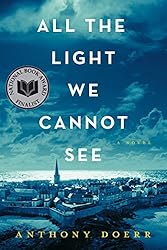
All the Light We Cannot See, first read of the new year

My first official read of the new year was All the Light We Cannot See by Anthony Doerr.  And before I was half-way through the book, I was already recommending it to others, hoping they would read it as soon as possible, so we could have a book discussion.  And really this book is ripe for discussion.

Anthony Doerr's book made it to the top of numerous top ten of 2014 books and that is how I discovered it.  My trusty EW reviewer told me that the book was about a boy and a girl and was the most hopeful book they had read in a while.  At least that's what I remember from the review.  And although I am not normally a fan of historical fiction, I thought I would give it a go.

I, like the EW reviewer, do not want to give away too much of the book.  (I hate spoilers and you should, too!) So, I will just say that it follows the lives of a number of people including a girl and a boy in the years leading up to and during the Second World War.  And even as I sit writing this review, I am struck by one major theme: truth.

In the years leading up to the Second World War truth (the this-is-the-real-deal, unadulterated truth) was scarce.  Propaganda was rampant.  But what was worse than that is many people wanting to create their own truth because what they saw around them just couldn't be so.  The horrors of the Third Reich's rise presented people with the opportunity to face the reality of what was happening or create their own excuses or escapes to remove themselves from the harsh truth.  Often the excuse was self-preservation - knowing that if you had to face reality, it would destroy you or ones you loved, or both.

This is what I see as a major theme of the book and of my favorite movie of all time, Life is Beautiful.  The reader/viewer is forced to place herself in the shoes of the characters and ask herself, "What would I do in that situation? Would I lie to those I love?  Would I lie to myself?  Could I accept the truth of the situation, or would I choose to escape/ignore?"

In All the Light We Cannot See many of the characters choose to believe stories they are told, to believe propaganda, to see what they want to see, and even to lie to one another in hopes of providing comfort.  But there are a brave few in the book: the ones who see the truth and refuse to cover it up with myths and denials.  These are the characters that I connected with in the book.

There are many more themes to explore from the book.  As I said, it would make a great book for group discussion.  Ultimately, I very much enjoyed the simple (yet often profound) prose and the structure of the book (a jumbled timeline converging to a single day).  I did not check to see how many pages the book was before reading it on my e-reader.  I felt this would be a short book and so I savored each word for the first 100 pages or so.  But then I checked and found it was over 500 pages and upped my reading pace decidedly.  I feel like the the denouement could have almost been omitted and found I would have liked for the story to end differently, but the Second World War didn't provide everyone with a perfect ending, either.

Have you read it?  Let's talk.

-L

Rating: 5 out of 7
This book fulfills the "Book by an Author You Haven't Read" requirement in my challenge for the year.

Tuesday, February 7, 2012

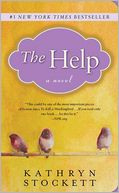
The Help: A Rumination on Civil Rights and such

So, I have a small timing issue (previously discussed on this blog) in which I do not read according to current bestseller lists.  I wait a little while, try to give a book some time to breathe (for me to forget all the spoilers I think I have heard through my stopped up ears), and then I read. 

The latest read to fit into this category of books for me is The Help.  The ubiquitous read was EVERYwhere last year and the year before: book blogs, newspapers, morning television, etc.  The furor was renewed with the creation of the motion picture adaptation.  Which is what brought me on board. 

I like to attempt to read the source materials for most of the movies (that have source materials) before I see the movie.  In fact, I tend to refuse to see movies until I have read the book...yes, still waiting on The Maltese Falcon.  So, since The Help (the movie) has been nominated for the Academy Award for Best Picture and I am going to the AMC Best Picture Showcase in a couple of weeks, I found myself with some reading to do! 

Thankfully, the book is of the page-turning sort.  It is a well told story, even if the dialect gets in the way a little bit. 

I couldn't help thinking of my summers in Mississippi with my grandparents in the late 80s.  Many of the vestiges of the racism that formed the struggle at the center of The Help, were still evident.  A trip to the Piggly Wiggly with my grandmother was still included a chance to hear the n-word used, to see the lines drawn subtly between classes and races.  My grandmother had a black woman to help her around the house on a weekly basis and this was still pretty common.  My grandmother looked down on her, but also showed her kindness and a concern for her family that was palpable to a child under the age of ten.  The contradictions inherent in these kinds of relationships were easily recognizable and equally infuriating. 

I grew up with a strong aversion to racism and had a real-life struggle with friends at a young age that left an impression on me forever: that the lines drawn between people are often not drawn by others for us to see, but are drawn by suggestion.  Some of us can overcome the power of that suggestion and shrug off stereotypes to examine people as individuals.  Some of us cannot overcome the power of those persuasive influences and are doomed to follow in their opinions and actions.  What it comes down to in the end is the question: are you going to follow or ar you going to lead? 

The characters who form the center of The Help are of the latter group: leaders.  They don't stand up and make speeches or try to force others to see things their way.  Instead they live quiet lives of conviction and wait for others to catch on.  I think it is this portrait of a leader in the midst of the civil rights era that has made The Help the phenomenon it is.  There is something that resonnates in the queitly done everyday activities that change the way others think.  It is leading by example, even if it looks like no one will follow.  This is the type of person who really accomplished civil rights reform in America and Kathryn Stockett paints their portraits sharply and beautifully.

I am glad I read The Help and I really am looking forward to seeing the film.  I am also interested in getting the audio version.  Has anybody seen the movie or heard the book?  Please let me know what you think.

Rating: 6 out of 7

-L

Sunday, January 23, 2011

Blind Assassin

Ok, so I will freely admit it...I have been in a reading rut.  Well not so much a reading rut, but a writing rut.  Blind Assassin marks the 5th (maybe 6th) book I have read in the last few months for which I have not written a review.  I know some of our readers must be sad.  Wait, do we still have readers?  Oh well....

I do have a credible (in my estimation) excuse.  That being the baby we are expecting in the early part of summer sucks all my brain cells normally dedicated to writing and uses them for more useful things, like fashioning itself out of small bits of DNA.  So baby excuse aside, I will attempt to write more reviews over the next couple of weeks of books I need to let the world know I have read, if for no other reason than to try to jog my memory of their various subject matters. 

The Blind Assassin: A NovelThe Blind Assasin by Margaret Atwood....what do I think of this book?  Interesting.  It is the second of her books I have read.  The first, A Handmaid's Tale was so incredibly odd and engrossing and obfuscated that I STILL don't know what I think about that one.  This must be the modus operandi for Ms. Atwood's writings.  She, like no other modern author I am aware of (keep in mind that limits the scope quite a bit), approaches storytelling in shocking and very dissimilar ways.  I get the feeling by reading just two of her books that upon opening one of her novels, the reader will never quite be sure of what to expect. 
Case in point, the story of The Blind Assasin is equal parts: novel within a novel, flashback sequences to tell a story, fictional newspaper clippings, and modern day musings.  Atwood weaves the tale (let's call it a mystery) in so many different ways, it can be offputting to the reader.  Often I found myself trying to remember what I should have already known about the characters, while attempting to guess at what was coming next.   The story that spans the period between the World Wars appeals to the senses of the reader and includes many images that blur the lines between the author's created fiction and her created reality.  In a way, Atwood gives almost everything to the reader but then removes just one or two things, thus blinding (get it?) the reader to the real truth.  When you get to the end, you feel almost let down, like you didn't really get the mystery solved, but you are left with more questions.  Again, I think this must be a hallmark of Atwood's work. 

Bottom line: I don't think I get it as much as I should, although it wasn't bad.  This would be an excellent book club selection, as it would generate much discussion. 

Rating: 5 out ot 7

-L

Monday, August 2, 2010

The Crossroads of Gilead

I have much to say regarding the Pulitzer Prize judging panel from a few years back, especially in comparison to the panel from 1940.  The standards must have changed quite a bit during the intervening years.  That is not to say that Marilynne Robinson's Gilead was not a good book.  It is more a statement that John Steinbeck's The Grapes of Wrath was on a whole other level (Rachel Zoe would say, "It is everything!").   The persistence of great prose throughout a novel is the standard by which I choose to judge a book.  Steinbeck had the consistency Ms. Robinson lacked. 

Gilead: A NovelWhy am I being so hard on Ms. Robinson's acclaimed work?  And why the comparison of two seemingly disparate books written over a half century apart?  Well, because I can.  And because they discuss some of the same events (i.e. the Dust Bowl era).  That, and The Grapes of Wrath shares an accolade with Gilead: the Pulitzer.

But enough of my rant.  Here's my analysis of Gilead:

Take a look at the cover of the book.  That tells you everything.  In a world where people say, "You can't judge a book by it's cover," this book is defined by it's cover.  It should have gotten the award for Best Explanatory Book Cover or Most Matchy to the Plot Book Cover (I obviously should  not be in charge of naming book awards). 

At first glance, the cover art seems to depict a cross.  Similarly, at first glance, the book is about a Congregationalist preacher in a town called Gilead (a Biblical reference).  Then, as the story unfolds, one discovers that the themes of the book are about the juxtaposition of opposites.  Another look at the front cover reveals the "cross" is not a "cross" but a crossroads, a place where roads going in divergent directions meet (in case you didn't know).  Thus, the reader discovers the meeting place, the common ground, even the Golden Mean (if you like Aristotle) where opposites do not attract, but rather find they follow the same path, if only for a moment.

The book is less a novel and more a meditation journal of the preacher, John Ames, initially written to his son.  His original intent of writing is quickly abandoned through Ames's constant attentions to the theological and emotional issues he spends his days exploring.  The meditations (I chose not to call them ramblings) show a old dog can come upon new epiphanies, even as he comes to the end of his life.  He sees the curses of the past bleeding into the blessings of the present.  He discusses walking the path of ruin in the chance of coming along hope.  He looks back on searing loneliness in the face of  current companionship.  He grants perceived sinners grace and forgiveness from a once bitter heart.  He explores the heartbreaking reality of raising a young son even as he, as a father, is not long for this world. 

Sounds pretty good, right? The problem with the book is the mode of writing.  I found the fiction journal a hard format to really get into.  After reading memoirs and journals in the past, I thought the fiction journal lacked weight and depth.  Also, the meandering thought process is tedious.  The author put a hint in the book that she may have felt that way too: "I think I'll put an end to all this writing.  I've read it over, more or less, and I've found some things of interest in it, mainly the way I have been drawn back into this world in the course of it."  I mean the "guy" who "wrote" the journal only found some of it interesting.  I feel the same.  There were some moments of greatness, but for the most part it just: was.

Rating: 3 out of 7

-L

Note: I know some of you are thinking the name John Ames sounds familiar.  That's because it is!  The "Tom Ames' Prayer" by Steve Earle is a captivating story that does not ramble at all.  Each word is perfect and the plot, succinct as it is, explores some of the same ground as Gilead.  My Rating for the "Tom Ames' Prayer": 6.9 out of 7.

Thursday, July 8, 2010

The Greatest Thing...

I just finished The Greatest Thing Since Sliced Bread by Don Robertson.  Rarely have I loved a book this much!  I want everyone I know to read it and everyone I don't know to find out about it and share it with a friend.   It is heroic, beautiful, tragic, uplifting, etc.  AHHH! 

Side note to explain why I picked the book: I had a love affair with a magazine.  We broke it off a couple months ago because I found out it was a whore, as I was paying way too much for it a year.  I am currently trying to figure out how we can work things out (i.e. I can get the subscription for much cheaper).  In said magazine, Stephen King writes a semi-regular column.  I have never read a Stephen King book and find it unlikely I ever will; but I feel a kinship with him.  I trust him and his opinions on just about everything (culture related).  So, I was browsing the clearance rack at Borders a couple weeks ago when I found a book highly recommended by Mr. King.  Right there on the front cover, no less.  It was cheap and it looked interesting (the blurb, I mean.  I rarely read the summaries of novels, they are rife with spoilers); so I bought it.

The Greatest Thing Since Sliced Bread: A NovelThe story is a wheel story (like Seinfeld was) where there is a central character and all the other characters relate to the protaganist in some way (Even the lady in the above picture).  The central in this one is Morris Bird III, a Cleveland-born, smarter than the average 9 year-old boy (in the head, as well as the heart).  The book is part bildungsroman, part odessey, part adventure novel.  It is utterly unmissable.   All the other characters, named and unnammed, known and unknown to Morris Bird III have lives affected by this young boy. 


I am loathe to tell you any of the details of this book other than the 4 pieces of advice given to Morris Bird III in the book.  They are good:
1.  If you love a thing or person you should not hold back.
2.  There's nothing wrong with doing something you think is right even though nobody wants to help you, even though people actually try to stop you.
3. Don't put comfort ahead of duty.
4. Remember to look at the sky at least once a day, it helps to keep your perspective.

Supplied with these simple truths and a tender heart, Morris Bird III sets out to follow the advice of those he respects.  The resulting story is not so much a surprise of circumstances (I guessed most of it before the 50th page), as it is a marvel of humanity.  The fact that there is much foreshadowing here does not detract from the tale.  Instead it lends an air of mystery; a shock at the turn of events, even. 

The device Roberston employed best in this novel was repetition.  The kind that is subtle, but reinforces attributes of characters: like tenderness or movement or precision.  Rarely do authors get repetition right.  Often it is so heavy handed, it borders on annoying (see: Let the Great World Spin).  Robertson punctuates his story through repetition, giving the reader ways to mark time, take note of foreshadowing, and simply get to know the characters. 

I told -D I would like to create a list of Exposure Musts for our future (hopeful) children.  The things they must read, hear, see, etc. before they leave the nest.  As of yesterday, when I was halfway through this book, The Best Thing Since Sliced Bread made it to this list.  Someday we will write a post letting you know what else is on the list, but in the meantime: Go. Purchase. Read this book.

Rating: 6.8 out of 7

-L

Wednesday, June 23, 2010

If it is going to Spin, could you make it faster?

I guess you live inside a moment for years, move with it and feel it grow, and it sends out roots until it touches everything in sight.
Let the Great World Spin: A NovelAfter reading rave reviews of Let the Great World Spin by Colum McCann, I decided it just might be the book for me.  Drew obliged my fancy by purchasing it for me for my birthday.  I just now (a couple weeks later) got around to reading it.  For those who haven't heard, the story revolves (I use that term loosely) around the high-wire walk between the Twin Towers of the funambulist, Phillipe Petit way back in 1974 and the lives of the people of New York.

How I feel about this book is a little complicated (the reaction I think McCann must have been working towards) - it is not a bad book, but it is not a book that I would recommend highly.  It may be a book for you.  It was a section of a book for me.  McCann seemed to hit his writing stride about two-thirds of the way through the book.  Much like Anita Shreeve's The Weight of Water (reviewed here), there are small sections of this book that are perfect.  Other parts of the book have great turns of phrases, some of the time.  Other phrases seem contrived, like he was attempting to be clever, to be deeper than he really is.  Also of annoyance was the extended use of fragments and repetition (At times I felt like I was listening to certain Alanis Morrisette songs on repeat).  The result is  tedium -  a desire to be at the end, to be finished with the multi-layered story.  I finally got there. 

It seems I have read a lot of modern authors lately who prefer to tell their stories in layers.  It is not an altogether bad thing, but it can be a little disjointed.  I find myself comparing the level of writing in each narrative.  Some sections are written better than others; and, by comparison, the rest suffer.  In this book certain characters seem almost unnecessary (i.e. the graffiti obsessed photog., the computer nerds from California); like McCann wrote them, became attached to them, but forgot to attach them to the rest of the story. 

For the characters that do connect with one another, there are many similarities to their stories - linking them, showing them to be part of the human experience.  Each character has a life defined by decisions made.  The decisions can be as distinct as taking priestly vows or taking a stroll (prostitution); or they can be as similar as taking the rap on a hit-and-run or going to prison for a loved one for a robbery.   Thus, each of the characters must live with the choices, some are driven to drink, some to suicidal thoughts,some to death.   There is a sadness that pervades the narrative due, not just to regret, but also to the inevitable consequences of self-determination. 
New York had a way of doing that. Every now and then the city shook is soul out. It assailed you with an image, or a day, or a crime, or a terror, or a beauty so difficult to wrap your mind around that you had to shake your head in disbelief.
The story, told with the hindsight of the events of 9/11, is saturated with what could only be described as references to the events of that day. The above quote speaks to that. Additionally, the sadness of not being able to climb to the heights of the towers that once were is expressed here: "Sometimes you've got to go up to a very high floor to see what the past has done to the present." McCann includes a reference to the lack of a memorial at Ground Zero:

He had said to his wife many times that the past disappeared in the city. It was why there weren't many monuments around...nobody felt a need to lay claim to history. Why bother? You couldn't eat a statue. You couldn't screw a monument. You couldn't wring a million dollars out of a piece of brass.
What is left, and what is the point of the book, is the memory of individuals. The memory of the early morning high-rise walk of a slight man with cops crying out to get him to stop. The memory of the moment choices were made that changed the course of a life. The memory of when everything was just as it should be. Before. And how transitory those moments are. The world spins on but the memories are what endures.

Rating: 4.5 out of 7

-L

NOTE: A friend of mine mentioned she picked this up on audio book.  I might give this a try because it may help with the tedium of the fragments and repetition.  Anybody heard this audio book?

Wednesday, May 19, 2010

The Poisonwood Bible

The Poisonwood Bible: A Novel (P.S.)Upon opening this week's book, I was immediately struck with the feeling I would never get through it.  The prose is so ethereal and without context.  My persistence was rewarded upon turning the first page of the first section: The Things We Carried.  I was suddenly immersed in a world of context narrated by the female relations of a missionary man from Georgia, setting himself and his family down in the strange land of the Congo at the precipice of independence.  His ignorance of almost everything in life leaves scars on his daughters, his wife, and even himself; only he is unable to recognize or admit them.  The tale of The Poisonwood Bible (by Barbara Kingsolver) is one of striving for the purpose of independence to find there is no such thing.  Oppression is the lot of all men in life - it is just a matter of one's perspective on their suffering.   Do you choose to submit under the hand of an angry god?  Do you choose to build a life of the scraps of hope you find along the way?  How will you survive a land so destructive even the jungle will creep in on you, seeking dominion, if you turn your back on it for a moment?

The themes of this book are worn on it's sleeve.  They permeate every page with an outspokenness that must fit the struggles for independence of all conquered nations.  If someone does not stand up and raise their voice, there will never be freedom, right?  In telling this story oppression must be defined.  Kingsolver accomplishes this through the first two books: Genesis and Revelation.  She identifies the major players in their respective roles of oppressor and oppressed, each a metaphor for the greater struggle for Congolese independence.  The third (Judges) serves as the wake-up-call to the consciousness of all involved.  There must be a paradigm shift; something must change.  The last four books cover the ground of independence sought and gained (?). 

Maybe it is just me, but the last couple of books really could have been left off.  Maybe it is the free person in me that understands the struggle, the attainment, that doesn't need reminders of a life of oppression left behind.  They slithered and crawled and worked their way free, I don't need a recap of the rest of their lives.  They are free, right?  Well, "not so much," says Kingsolver.  They only thought they were free, they were only free of certain things.  They still have the memories.  The memories will never free them, no matter how they deal with them.

Memory is the device of the narrators of this tale.  All is told in reminiscence.  All is recounted with the understanding of what happened in the end, where each person ended up.  In keeping with this Kingsolver foreshadows many of the plot points  in a heavy-handed way.  For the most part the reader knows what is going to happen well before the action takes place.  Somehow it doesn't mar the story.  It reads like a person telling a joke and letting slip the punchline, long before they are supposed to.  It doesn't mean it is not just as enjoyable, it is just not surprising. 

Memory also is the thing each person carries out of the Congo with them.  The memory of what has happened shapes the lives of each character.  Each character remains true to the original sketch of themselves, but because we are looking back, they tell only the things they think are important to who they are now.  Each one a pragmatist, a scholar, a narcissist, a survivor.  The reader gets from them just what they want to give; but cleverly, he knows more about them than they think he does.  This is due to the device of multiple narrators.  Kingsolver tells her story through the eyes of the Price women.  Each is a a fully realized character, with her own narrative style.  My favorite is Adah, the crooked-backed, palindrome spouting, lesser-twin to Leah.  Her story resonates more fully because she uses words sparingly and speaks even fewer.  Her chapters are rich because the reader would not know her otherwise.  Each of the other characters are easily understood through the telling of their counterparts; but because Adah is silent most of the time, she is privileged to tell her story her way.  She is easily one of the most compelling characters in modern literature. 

With memory comes regret.  Kingsolver deals with this in various ways, but no more clearly than here, the words of Orleanna Price:
Try to imagine what never happened: our family without Africa, or the Africa that would have been without us.  Look at your sisters now.  Lock, stock, and barrel, they've got their own three ways to live with our history.  Some can find it.  Many more never do.  But which one among you is without sin?  I can hardly think where to cast my stones, so I just go on keening for my own losses, trying to wear the marks of the boot on my back as gracefully as the Congo wears hers.
The scars remain; the bruises, and the illnesses never healed.  But the characters learn how to deal with regret, by understanding it must have been this way.  The story could not be told, but by walking down that particular road.  What they would have been otherwise is unthinkable; this is who they are now.

I could write a whole other post on the particulars of the theology that took them there.  A works-based system, insisting the justice (in human perception) of God would reward the "goodness" of a man bent on becoming a spiritual giant, without any of the tools necessary. I would set it against the backdrop of a tribal theology that is not very far displaced from the theology of the missionary, just set on a different focal point.  This could be discussed in grand detail to tedium by this humble church history (theology) major, but I have already said the most important stuff regarding this book.  Read it for yourself and discover a world of themes hidden just under the skin, like the zillion parasites of the Congolese jungle.  

Rating: 4.5 out of 7

-L

Monday, March 1, 2010

Can you survive the Road?

In was a unique week for Our Year in Books.  Our roads converged, so to speak, and we ended up reading the same book.  Drew read it first and enjoyed it so much he encouraged me to get my hands on it.   The book in question:  The Road by Cormac McCarthy.  As we read through the book separately, I thought it would be a good idea to do a joint post.  The following is the result. 

I should say this is inspired by Inner/Outer Circle from my days in AP English - a practice I enjoyed and loathed with equal passion at the time.  Let's get going:

L:  This reading was inspired, in part, by our love of the movie No Country for Old Men.  Although they are different stories and different mediums, how do you think the style of McCarthy is similar in both works?

D - Considering that I'm basing this off the movie version of NCOM and the book The Road it might be a little off, but we'll see once we get to reading NCOM. I thought that the endings were incredibly similar. They aren't what you would expect from a movie or a book. First read/view, it's almost a let down! You are expecting something different. But after you go back and review it again you begin to see that there's a bigger picture involved. Dialogue felt similar to me - sparse, but enough. It really lent itself well to both novels. Between those two, it felt Cormac.

L:  The book deals with fear in different ways - the boy and the man, but also the reader.  Did you feel a sense of dread while reading?  And how do you think the way the characters dealt with fear pushed the plot along?

D - I don't think I felt a complete sense of dread as a reader. It was definitely creepy at points, and you did feel for the characters. I didn't get too emotional with this book; or as much as I was expecting to considering that it appears to be an emotional journey. The movie might do that more... we'll see. As the book progressed, I thought we saw more courage from the Boy and perhaps more fear from the Man. There was a sense of hope in hopelessness. It was fitting for their plight.

L:  That was another theme in the book - hope.  What do you think "carrying the fire" means?

D - Who knows if I'm right or not! This comes from my thoughts on the last question - I believe it meant that they carried humanities hope. If they thought they didn't need to go on, it was lost. If they resorted to what the rest of humanity had become(or what they saw of humanity) then it was lost. The fire was what carried them that far. Faith in the good guys.

L: To that point, was their hope misplaced?

D - No. I didn't feel that the Man ever lost faith in the Boy. There were points where he might have been helpless in the desolation, but he was always looked after by something greater(perhaps he felt it was coincidence). The Boy never lost faith in the Man although I've read a couple reviews saying that he ended up being alienated by some of the choices the Man made. I never saw that. He always ended up trusting the Man's decision. The Boy also had hope even at the conclusion. It was probably the most redeeming portion of the book. The fire was carried.

L:  Ok, so what about the mention of God in the book?  At one point the man says that the boy is God.  Do you think Cormac's created world has a god?  If so, what kind of god is he/she?

D - I don't know if Cormac truly had a God/god by the end of the book. The Man put all his desires into his kid. He lived for the Boy so it was easy to see why he saw the boy as all there was. In the end, I think Cormac felt that the good side of humanity was a god of sorts. I'm biased though. If you capitalize God there is only one conclusion... I don't think his was the same.

L:  Last one: There is one (ONE) paragraph in the book that is written in the first person (narrator: the man).  Why?

D - I have no clue! I didn't even notice it when I was reading. It was a flashback so maybe he was trying to illustrate the story from someone elses perspective. My guess is that he forgot what he was writing for a paragraph and then forgot that he had been writing in first person when he transitioned back to third. I'm guessing you were the only person that noticed.

Finally, the ratings:
Leah: 5.5
Drew: ^ what the heck? 8.2! But I *heart* all things apocalyptic.

Wednesday, February 17, 2010

Olive

I have been woefully behind on my books and posting for the last couple of weeks, so I am glad to be officially caught up.  I finished reading Olive Kitteridge by Elizabeth Strout this evening.  Unlike the previous collection of short stories, this one was an easy read.  These are unique in that the titular character is the center of attention while she does not inhabit all the pages of the book.  She merely walks in and out of the lives of the small town folk, sometimes with only a mention.  This brought to mind the way that we interact with one another, some people are of more importance than others.  In the grand scheme of things only certain people will have a story that links up with a particular person's story; others end up as footnotes. The wonder of this book lies in examining the strings that connect us and keep us at a distance at the same time.

I believe Olive is a character worth reading (I mean those Pulitzer people are never wrong, right?).  I found her to be longing, like so many other characters for acceptance and love, not realizing (until way too late in life) she had both all along.  Not to get all armchair psycho-babble on you, this is the part of Olive that is too often in most people.  I love the quote towards the end of the book regarding her faithful, put-upon, and resilient husband. "Oh God, yes, she was glad she'd never left Henry.  She'd never had a friend as loyal, as kind, as her husband."   I hope I do not have to wait until my years number in the 70s to realize the love that surrounds me and puts up with me (so maybe I just did). 

An interesting other element of the story is the pervasiveness of mental illness in a small town.  I am not sure the author would view her rich characters in the same way, but they, for the most part, were either messed up in the head or knew somebody that was.  This played into the whole nature vs. nurture debate, with nature declaring the clear victory in these people seriously in need of a therapist.  I don't know if she intended to make a statement on the ways of a small town society in this way, but it seems the ratios were a little off in this town.

Rating: 4.5

-L